Struggle

Founded upon an unyielding nationalist and martial doctrine, Bengal Volunteers has embarked upon what its members describe as a mission to inspire a new Bengal Renaissance rooted in discipline, courage, intellectual awakening, and cultural self-confidence. The organization, which once occupied a significant place in India’s revolutionary struggle against British Imperialism, was born from the fiery determination of young patriots who believed that freedom demanded extraordinary sacrifice and an uncompromising spirit of resistance. The passage of time transformed its organizational character, and today Bengal Volunteers functions as a Registered Trust in independent India, carrying forward its historical memory while adapting its ideals to contemporary realities. Though its methods and activities have evolved with changing times, the organization asserts that the essence of its foundational values remains unchanged — an unwavering commitment to discipline, national consciousness, courage, and collective empowerment. 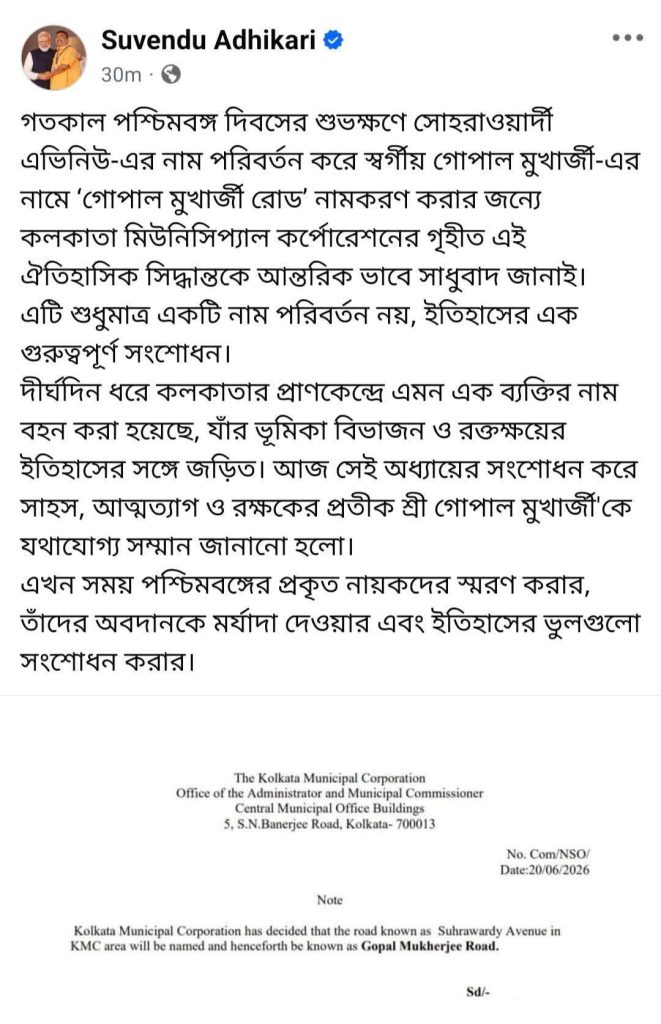 At the centre of this modern transformation stands its General Secretary, Shri Animitra Chakraborty, who is regarded by members as the guiding force behind the organization’s renewed direction and contemporary identity. Under his leadership, Bengal Volunteers seeks to establish a bridge between its revolutionary heritage and a modern framework of social and intellectual organization. His vision places special emphasis on cultivating a strong and confident Bengali Hindu community, with a focus on physical preparedness, leadership, and a sense of collective responsibility. Bengal Volunteers regularly organizes combat and self-defence training camps, particularly during times of social necessity, reflecting its continued emphasis on courage and preparedness. Alongside physical training, the organization also dedicates itself to intellectual development through its publication Kanjik and its annual volumes dealing with subjects such as science, strategy, warfare, history, and civilizational thought, demonstrating its belief that the strength of a society lies equally in the power of the mind and the resilience of the body.
The contemporary journey of Bengal Volunteers has also been marked by its interventions in matters of historical memory and public symbolism. Among its notable recent campaigns was the demand to rename Suhrawardy Avenue, arguing that public spaces should not commemorate figures associated, in their view, with the painful memories of the Direct Action Day violence of 1946, during which large-scale communal killings took place in Calcutta. The organization maintained that the avenue’s name represented a historical wound for many Bengali Hindus and therefore advocated for its removal. The subsequent decision of the Government of West Bengal to alter the name was viewed by Bengal Volunteers and its supporters as a recognition of growing public sentiment surrounding the issue. They consider the development a significant achievement arising from the persistent efforts of Shri Animitra Chakraborty and the Bengal Volunteers team, who campaigned relentlessly for what they regarded as historical correction and cultural justice.
The story of Bengal Volunteers in the twenty-first century is, therefore, presented by its followers as a narrative of continuity and transformation. From a revolutionary movement that challenged colonial rule to a modern social organization seeking to shape cultural, intellectual, and physical consciousness, it has attempted to preserve the spirit of its past while redefining its role in contemporary India. Its members believe that the path toward a stronger Bengal requires a combination of iron discipline, fearless character, intellectual excellence, historical awareness, and organized social action. Whether through training camps, publications, public campaigns, or efforts to revive what they perceive as the martial traditions of Bengal, Bengal Volunteers continues to project itself as an organization dedicated to a broader vision of Bengali resurgence and national rejuvenation. In this journey, the leadership of Shri Animitra Chakraborty remains, according to the organization and its supporters, a central force shaping its ambitions and future direction.